nonprofits
School Education to Rural Children
Education is the only ladder for these rural children to climb out of poverty. Isha Vidhya creates a bright future for 7158 rural children in its 9 rural schools.
Childhood Malnutrition
Childhood Malnutrition
One in three Nigerian children under five is stunted as a result of chronic undernutrition. This not only slows physical growth but also weakens immunity, increases vulnerability to illness, and reduces a child’s ability to learn and thrive.
Low Milk Access
Low Milk Access
Milk is one of the most complete sources of protein, calcium, and vitamins, yet Nigerian children consume only 8–9 litres per year on average—far below the global average of 44 litres. High costs, weak supply chains, and limited cold storage keep this vital food out of reach for many families.
Education Barriers
Education Barriers
Undernutrition directly impacts education, with children often too weak, distracted, or absent to learn. In underserved communities, attendance rates can drop as low as 68%, robbing children of the classroom experience needed to build brighter futures.
Program steps
Helping Today. Helping Tommorow Charity
Schools are more than just places of learning—they are trusted community hubs where children can be reached consistently and safely. Delivering milk through schools ensures that every child, regardless of family income or background, has equal access to daily nutrition. Structured routines allow for predictable, cost-effective distribution, while teachers and volunteers provide oversight, maintain hygiene, and keep accurate records. Linking schools with nearby health centres also makes it possible to monitor children’s growth and detect early signs of malnutrition. This integrated approach not only strengthens children’s physical and cognitive development but also improves attendance, classroom attentiveness, and long-term educational outcomes. By making nutrition part of the school day, we create a lasting impact that extends beyond the classroom into homes and communities.
The Milk Gap
Why Nigerian Children Are Missing Out on Essential Nutrition
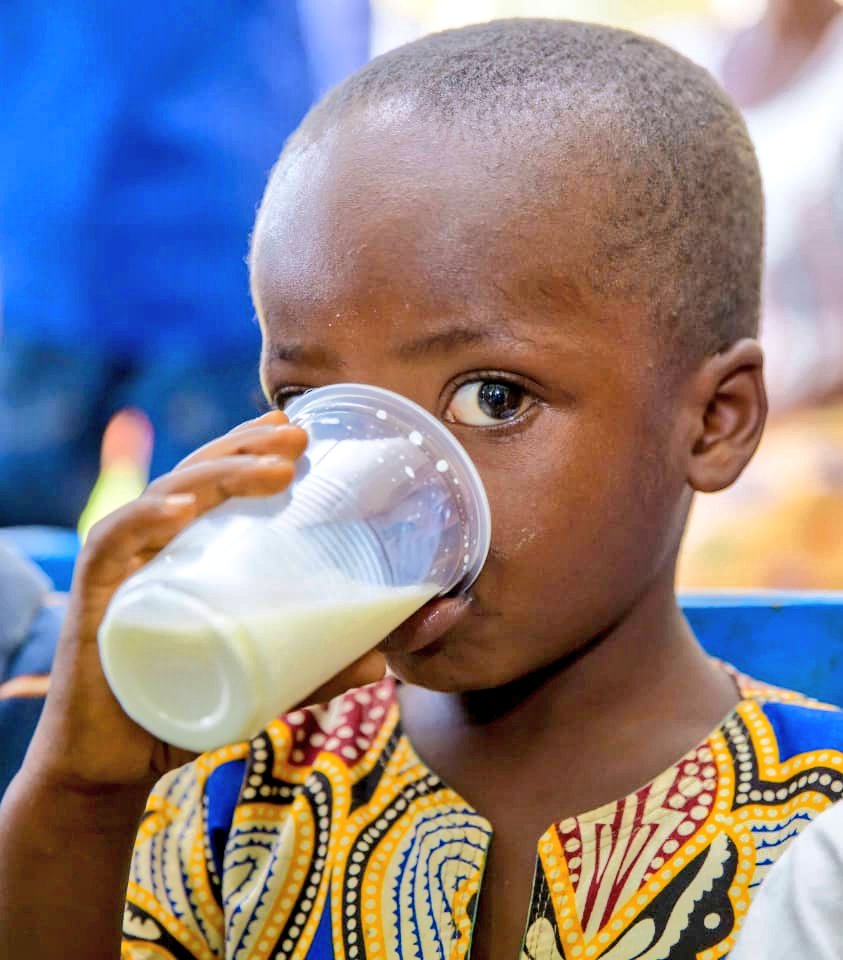
While milk is one of the most complete and affordable sources of nutrition—rich in protein, calcium, and essential vitamins—its consumption in Nigeria remains alarmingly low. On average, Nigerians consume only 8–9 litres per person per year, compared to the global average of 44 litres. This gap is not simply about preference; it reflects deep challenges of affordability, limited supply, and weak cold-chain infrastructure. For many low-income families, a daily cup of milk is considered a luxury rather than a staple. As a result, millions of children grow up without access to the nutrients they need most during their critical early years of development. Closing this gap is essential to improving child health, boosting learning outcomes, and building stronger communities.
